

One of These Nights
The Eagles
1977
The title track is arguably groundbreaking in its range. I mean we’ve all heard “One of These Nights” often enough to easily recall the song, but I doubt anyone who’s listened to it carefully could categorize it. Gun to my head, I guess I’d call it hard country disco rock. And even that leaves out soul and pop, which are also part of the equation. On paper, it sounds like the most unlistenable, marketing inspired, Frankensteinian mash-up of disparate genres you could conceive. But the song’s a gem and one of only a handful that I enjoy every single time I hear it.
The trick is that the song’s undefinable essence provokes such a complex response. The back beat is awkward, with drummer Don Henley sounding tired and unsure, as if he were still learning how to approach the song, if not the drums in general. Bassist, Randy Meisner, grooves on a high note riff that sounds like it was played underwater. Lead guitarist, Don Felder, leans into an arresting, milky, fuzz tone and delivers what is not only the best solo on this record, or on any of this band’s records, but one of the greatest solo’s in all of rock and roll. Don Henley’s voice soars above the track but never over reaches, resulting in one of his most understated and personal recorded vocal performances. Glenn Frey and Meisner join in on the chorus to create gorgeous multipart harmonies. Yet, the words they are singing are downright threatening….with Henley “searching for the daughter of the devil himself” and swearing to “find you” and “get you one of these nights.” Read more…

Low
David Bowie
1977
It’s 1977 and I drop the needle on David Bowie’s Low after a short bike ride home from the local Woolworth’s. It begins suddenly with a wordless, instrumental song fragment from the future called “Speed of Life.” The song is built with layers of otherworldly synthesizer hooks and guitar lines and it instantly shatters any expectations I might have brought to this highly experimental follow-up to Station to Station.
“Speed of Life” feels incomplete, because while there are no vocals, it is not written or produced like an instrumental track. That is, the melody isn’t carried by instruments instead of vocals, it’s simply not there at all. It sounds like a song that Bowie intended to sing at some point. At first, you expect him to make his vocal entrance, but as the song progresses the missing melody starts to materialize in your mind, only this is your melody…not Bowie’s. The song tricks your mind into filling in the blanks in this new form of interactive pop. I don’t understand what I just bought, but I’m enjoying it and like all of the songs on side one, “Speed of Life” ends too soon. Read more…
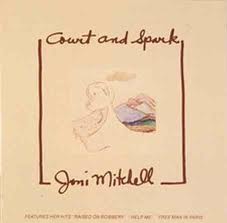
Court and Spark
Joni Mitchell
1974
I once had two smart, young feminist friends, who on more than one occasion, in an indirect and good-natured way, called me a chauvinist. I probably asked for it, because I happened to admit, in a moment of foolish honesty, to preferring the artistic works of male musicians and authors. I would counter, during our discussions, that it wasn’t so much that I considered female artists to be inferior — it was just that I had a harder time relating to a female protagonist’s perspective. And then like the bigot who says “some of my best friends are black,” I would counter that Joni Mitchell was one of my most favorite singers, songwriters and musicians.
Truth be told, the only reason I decided to listen to her in the first place was because I read somewhere that Jimmy Page and Robert Plant were huge fans. But once I heard Blue, For the Roses and Court and Spark for the first time, I could never stay away from her best albums for very long. No, I couldn’t really “relate” to her lyrics, but I was smitten with her honesty. I was amazed by the intimacy Joni Mitchell could achieve with a listener in just 40 minutes through the music carved into a 12 inch plastic disk. Read more…

Growing up has always been messy business, but with inspiration from Jimmy Page, Peter Frampton and my Dad, I coped by learning to play the electric guitar when I was 11 or 12 years old. I was terrible for months, but I really wanted to play Stairway to Heaven, Show Me the Way and the Guitar Boogie like my heroes. So I held that guitar long enough to gradually bend its will. In time, I knew enough about the electric guitar to make those six strings speak on my behalf, and transform my experiences, my insecurities and my dreams into notes.
Rock and roll taught me how to say “Fuck it, I’m Brian Kain. This is how I act, how I think, how I look, and who I am. Take it or leave it.” My records and my guitar got me through those transitional years and filled me with an inner “cool” I may have never really had. Read more…
As a guy who has spent nearly 4/5ths of his life obsessively collecting and listening to music, I am amazed at how long it took for me to finally pay attention to my gear and how accurately it reproduced recorded music. It happened just a few years ago when I bumped into an old BIC turntable at a local flea market. It was packed neatly, with the manual and other documentation tightly sealed in a zip lock plastic bag. Better still, it was offered at a bargain price of just $25. I’m not sure why I bought it, other than the fact that it had a cool retro look, seemed to be well cared for and I vaguely remembered BIC being a premium brand when I was a kid.
When I got the BIC unwrapped and fired it up at home, I was floored. The sonic upgrade over the cheap newer Sony turntable I had been using was not subtle. This was a game changer. I ran to the garage and started to pull out my old vinyl favorites. The BIC brought a sense of space, warmth and detail to the recordings that I did not know was possible. It was almost like hearing these records for the first time. This sweet little turntable, unfortunately, gradually grew to hate me, perhaps due to overwork. I knew this because it developed a strange proclivity to randomly and willfully spin in the wrong direction. The problem worsened over time and the BIC had to be put down, but it had served it’s purpose well. It opened my ears to the potential of recorded media. It taught me that well-designed, well-matched components could combine to present recorded music with remarkable accuracy and confidence. Read more…
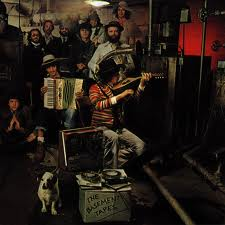
The Basement Tapes
Bob Dylan and The Band
1975
Back before everybody started converting them into “man caves”, wine cellars and S&M dungeons, nobody cared much about the average American basement. Unless you blew a fuse or your hot water went cold, the basement was an afterthought. They were poorly lit holes in the ground, booby-trapped with wiring, plumbing and heating ducks that could be downright dangerous if you didn’t watch your step. Damp and dirty, the basement wasn’t even good for storing most things.
But if you wanted to start a rock band in the 60s or 70s, the cellar was usually up for grabs and your best option. That’s why so many musicians started out playing underground and why they never seem to lose their affinity for the privacy and isolation you can find in a basement. For a lot of musicians, going down into the basement is like going back in the womb. Read more…


Todd
Todd Rundgren
1974
Few artists have tested the faith of his or her fans like Todd Rundgren. I mean here’s a guy who scores two big hits in 1972 with “I Saw the Light” and “Hello It’s Me” and then decides to release two of the most consistently experimental and uncommercial albums of his career with A Wizard, A True Star and Todd. This isn’t the way it usually works. Bob Dylan jumps to mind, having done something similar on a larger scale, but to a lesser extent with Nashville Skyline and Self Portrait. The difference is that Dylan didn’t want fame at the time, whereas Todd simply didn’t want to get pigeonholed so early in his career. He didn’t deliberately alienate his audience. He began a career long journey of musical experiments and invited his audience into the lab. Mission accomplished because from that point forward Rundgren became possibly the best known obscure artist in rock. Everybody knows a handful of his songs, but only a handful of dedicated fans know more than a few.
Count me amongst the latter. Listening to many of Todd Rundgren’s albums from start to finish, especially those released in the early to mid 70’s, does take fortitude, but there was always an upside. Rundgren took chances. When you ripped the plastic off a Todd Rundgren record from that era, pulled the vinyl from the sleeve, put the disk on your turntable and dropped the needle….you never knew what to expect. Read more…
This is shaping up to be an interesting week at the Justriffin headquarters. We already kicked things off with a fresh look at Graham Parker’s Howlin Wind. I hope you enjoyed the piece. I had a blast playing the record and writing the post. You can look for the first installment of “Between Two Speakers,” to appear later this week. This multi-part series is designed for anyone who wants to know more about audio equipment, formats and other factors that can have a huge impact on your listening experience. The series will highlight some of my unscientific, but time-tested tips for getting the most out of your listening sessions. Some of the topics I plan to cover will be:
The Quest for Gear, including:
- Stereo, mono and surround
- Exploring vintage equipment
- Options for the snobby audiophile
The Great Format Debate, including the pros and cons of:
- New and used vinyl
- CD,
- SACD,
- DVD-Audio,
- 5.1 Surround and
- Digital file formats
Creating the Ideal Listening Space
I’ll also be reviewing Bob Dylan and the Band’s Basement Tapes and Todd Rundgren’s Todd.
Thanks to everyone who’s tuning in. We’re slowly building content and an audience for the site. I have some real interesting plans for the site as more and more folks come on board, so if you’re enjoying my posts, spread the love and my site address. I’d love to know you’re out there, so be sure to shoot me a comment or two on the posts or a note with any ideas, requests and feedback you’d like to share.
Thanks again for reading! Without you, I’d be writing for my wife.
BK

Howlin Wind
Graham Parker
1976
Pink Floyd had acid (and pot). The Dead had pot (and acid). The Eagles had cocaine. And Graham Parker and the Rumor had a shot and a beer. Now, hold on. I’m not saying any of these artists did any of the drugs I just stuck right next to their names. I’m saying that with some bands, what you do when you’re listening seems to have an impact on what you hear.
Back in the 70s, they called Graham Parker and the Rumor a “pub” band, which was a polite way of saying they played to small audiences, for free beer and a few bucks in small English dive bars known as pubs. Howlin Wind captured the experience with authenticity. It’s the sound of pints, urinal cakes, ash trays and fist fights. By the end of the record you’re exchanging sloppy hugs, apologizing and looking forward to doing the whole thing all over again tomorrow. Read more…
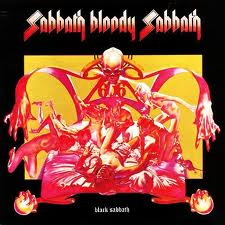
Sabbath Bloody Sabbath
Black Sabbath
1973
I like a good scare, but when it comes to devils, demons and the occult, count me out. The problem is, these topics/influences turn up frequently in rock and roll, going all the way back to blues great, Robert Johnson’s, Crossroads and his fabled deal with the devil. It’s one of the reasons I was never able to completely embrace Black Sabbath.
Sure, the Spinal Tap mockumentary did a terrific job of exposing the absurdity behind misogynistic, devil worshipping metal bands like Sabbath. Then in the early 2000’s Ozzy’s reality TV show, further deflated the band’s legacy and fear factor as the Osbourne’s aging, feeble patriarch mumbled and stumbled his way to a new kind of stardom. I don’t think he ever really knew that we were laughing at him. Against that backdrop it’s easy to forget that Ozzy Osbourne was a scary dude in the 70s and Black Sabbath were a legitimately frightening band. For god’s sake, Ozzie actually bit the head off of a live bat during one performance and the damn bat bit him back. He was treated for rabies. Read more…
 Brian loves South Jersey for its proximity to four metropolitan cities, the Jersey shore, the Pocono Mountains and some of the nation's most congested roadways. When he's not marketing education, or on a treadmill, BK spends most of his free time spinning vinyl, writing and playing guitar. Brian writes a classic rock blog at Justriffin.com and edits Planet Zombo.
  Just Riffin'